Stacking Systems are more than tall frames beside a warehouse aisle. They shape how products move, wait, and leave. A well-chosen system can increase storage density, shorten travel distances, and protect workers from awkward lifting. The wrong system can create congestion, product damage, and expensive delays. That difference becomes visible during a busy afternoon, when forklifts meet at a narrow aisle and every misplaced pallet matters.
John Paxton, former president and CEO of MHI, has said, “The future of material handling is smarter, more connected, and more adaptable.” His observation captures the practical challenge behind modern stacking decisions. A system must fit the building, inventory, equipment, labor skills, and expected growth. Selective pallet racks offer direct access. Drive-in racks increase density but reduce selectivity. Push-back and pallet-flow systems can improve organization, though they require careful loading discipline. Automated stacking solutions may deliver powerful performance, but they demand stronger data, maintenance support, and investment planning.
There is no universal winner. Context decides.
In real facilities, the best choice is often less glamorous than expected. A simple rack layout may outperform automation when product variety changes weekly. I have also seen density targets hide slower picking and difficult inspections. That is where judgment matters. This guide compares major Stacking Systems by access, capacity, safety, flexibility, installation demands, and long-term operating cost. It also questions common assumptions, because a system that looks efficient on paper may behave differently under pressure. Reliable decisions begin with measured workflows, accurate load data, and honest attention to daily handling conditions.
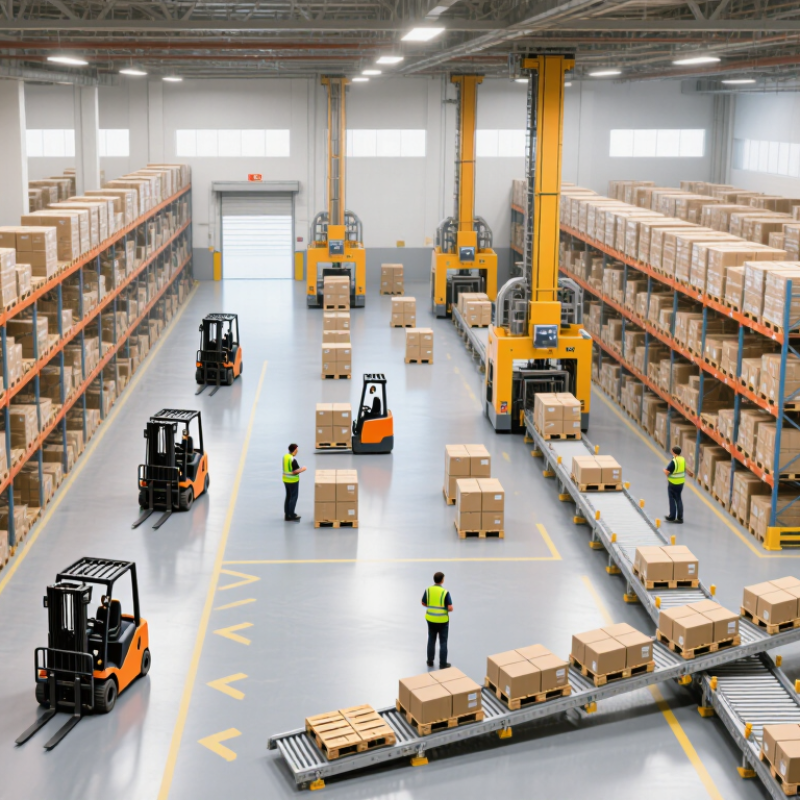
A stacking system is a planned method for placing goods vertically, safely, and accessibly. It uses floor space, pallets, frames, beams, guides, or automated carriers. The working principle is simple: loads are grouped by weight, size, movement frequency, and stability before storage. Fast-moving cartons usually stay near picking aisles. Heavy pallets belong on lower levels. Clear labels and load limits reduce handling mistakes.
Common systems include floor stacking, block stacking, pallet racking, drive-in storage, and automated storage and retrieval systems. Floor stacking costs less, but it can hide older stock behind newer stock. Pallet racking improves access and height use. Drive-in designs hold dense, similar products, although inspection and retrieval become less flexible. MHI’s 2024 Annual Industry Report states that 38% of surveyed supply-chain organizations use robotics and automation. That figure shows growing interest, not automatic suitability. Technology can also amplify poor storage decisions.
Safety remains the operating foundation. OSHA requires stored materials to remain stable and secure, without creating hazards. In practice, workers should check upright damage, uneven pallets, aisle clearance, and actual load capacity. A system should match the building, equipment, product profile, and replenishment pattern. The cheapest option is not always efficient. The most automated option may be excessive. Sometimes, the best design is a careful compromise.
It organizes goods vertically using floor space, pallets, frames, beams, or automated carriers. Loads are grouped by weight, size, movement frequency, and stability. Heavy pallets usually stay on lower levels. Fast-moving cartons belong near picking aisles.
Consider product weight, packaging, turnover, ceiling height, aisle width, and available equipment. Retrieval frequency also matters. A mixed design may work better when products vary widely. It depends.
Block stacking places pallets directly on the floor in organized rows. It costs less and suits stable products with similar packaging. Access becomes difficult when newer pallets block older stock. That detail is easy to underestimate.
Pallet racking gives each load a defined storage position. Selective racks provide quick access and clear visibility. Double-deep racks increase capacity but reduce retrieval speed. Forklift movements require tighter control.
Drive-in storage suits dense quantities of similar products. Forklifts enter storage lanes to place and retrieve pallets. It often supports last-in, first-out movement. Inspection becomes less flexible.
Push-back systems use inclined rails to move pallets forward. They save aisle space and support several pallet positions. Their moving parts need regular maintenance and careful inspection. More capacity can mean less simplicity.
Automation can improve movement, accuracy, and vertical space use. It cannot correct poor product grouping or weak traffic planning. Technology may amplify bad decisions. More equipment is not always better.
Inspect uprights, beams, pallets, labels, aisle clearance, and visible damage. Confirm actual load capacity before placing goods. Keep stored materials stable and secure. Small defects can become serious problems.
Not necessarily. Floor stacking costs less but may hide older stock behind newer pallets. Dense layouts can also slow peak-hour retrieval. I would test real traffic before trusting a paper design.
Product volumes, packaging, equipment, and movement patterns can change. Regular reviews reveal blocked aisles, damaged packaging, and overloaded positions. Some recommendations may need revision later. That is normal.
Stacking Systems are organized methods used to place, store, or arrange items in vertical layers, helping businesses and facilities make better use of available space. Depending on the design, these systems may rely on fixed frames, movable structures, automated mechanisms, or modular components. Each type offers different advantages in terms of capacity, accessibility, flexibility, installation requirements, and operating efficiency. Their applications can range from warehouse storage and inventory management to equipment organization and space optimization.
Choosing the right Stacking Systems depends on the specific needs of the environment. Important factors include the size and weight of stored items, how frequently they must be accessed, available floor and ceiling space, safety requirements, budget, and future expansion plans. A fixed system may be suitable for stable, high-volume storage, while a flexible or automated option may better serve operations that require faster access and adaptable layouts. The best choice is the system that balances performance, reliability, safety, and long-term value.

 Shibang Storage Rack