Choosing the right Boltless Systems is not merely a price comparison. It is a decision about safety, flexibility, labor, and future growth. A narrow warehouse aisle, uneven concrete floor, or changing carton size can quickly expose a weak choice. Details matter.
The MHI 2024 Annual Industry Report identifies labor pressure, customer expectations, and technology investment as major supply-chain challenges. The report supports a practical point: storage systems must reduce handling effort without creating new complexity. Grand View Research also reports continuing growth in the global warehouse racking market, driven by e-commerce and distribution expansion. However, market growth does not guarantee product suitability. No report captures every warehouse.
David E. Mulcahy, author of The Warehouse Management Handbook, offers a useful principle: “Storage must serve the operation, not the other way around.” Buyers should test that principle physically. Check beam locking, upright thickness, shelf load labels, corrosion protection, and compatibility with local pallets. Ask whether installers provide drawings, inspections, replacement parts, and clear maintenance guidance. Confirm the delivered cost, including freight, duties, labor, and future expansion.
A low quotation can hide expensive compromises. It may exclude bracing, accessories, or technical support. That weakness deserves attention. Global buyers also need regional compliance documents and realistic delivery schedules. Boltless Systems can support fast reconfiguration, but only when the connection design remains stable under repeated adjustment. The best option is rarely the cheapest one. It is the system that remains safe, serviceable, and adaptable after the warehouse changes.
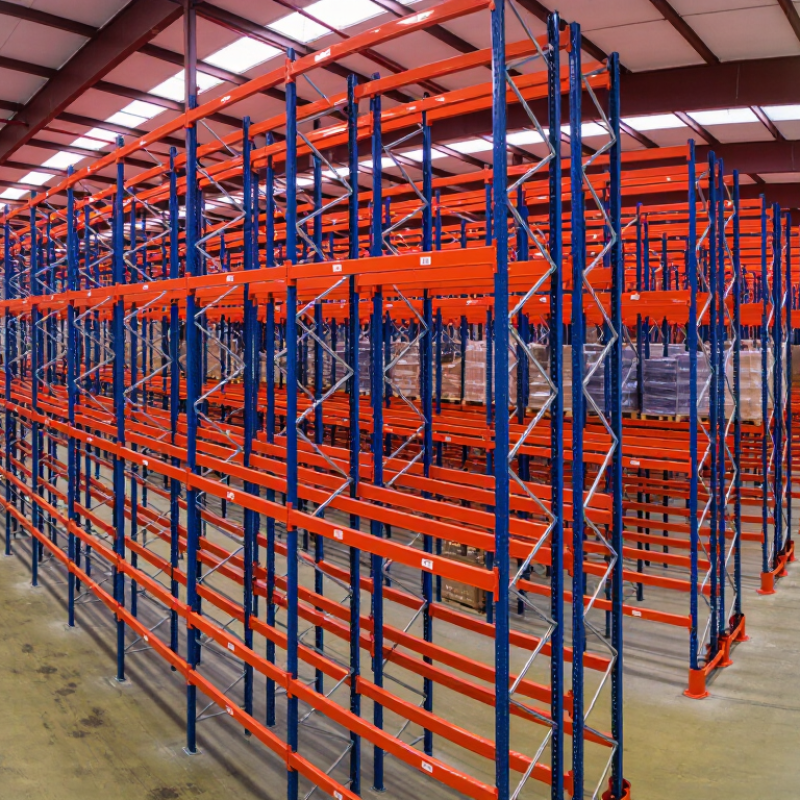
Boltless systems use interlocking panels, uprights, and clips instead of traditional nuts and bolts. Their parts connect through punched slots or rivet-style joints. A rubber mallet is often enough for assembly. This reduces installation time and makes later adjustments easier. However, “boltless” does not mean tool-free in every case. Some designs still need a level, safety gloves, or a small hammer.
These systems serve warehouses, retail stockrooms, workshops, archives, and household storage areas. In a warehouse, adjustable shelves can hold cartons, spare parts, or plastic bins. In a garage, stronger beams may support tires and equipment. Offices often use lighter frames for files and supplies. The best application depends on load weight, shelf depth, floor condition, and how frequently items move. A system designed for paper boxes may fail under concentrated metal loads.
Global buyers should examine load ratings, steel thickness, coating quality, and available accessories. Humid locations may require corrosion-resistant finishes. Uneven floors can affect stability, even when the frame looks rigid. Check whether instructions use clear diagrams and whether replacement clips are easy to obtain locally. Packaging also matters; bent uprights create expensive delays. I have seen buyers focus on price and overlook these details. That choice often creates extra work. Test one assembled bay before placing a large order, and measure the real load rather than relying on estimates.
| Boltless System Type | Typical Construction | Typical Load Range per Level | Common Dimensions | Assembly Method | Main Applications | Best Suited For | Key Buying Considerations |
|---|---|---|---|---|---|---|---|
| Light-Duty Rivet Shelving | Cold-formed steel uprights with riveted beams and particleboard, wire, or steel panels | Approximately 90–300 kg | Height: 1,500–2,400 mm; depth: 300–600 mm; width: 600–1,200 mm | Beams lock into punched uprights; usually assembled with a rubber mallet | Home storage, offices, archives, retail back rooms, small parts storage | Global buyers needing economical, flexible, hand-loaded storage | Panel material, corrosion protection, shelf adjustability, packaging volume, and replacement parts |
| Medium-Duty Clip-In Shelving | Steel frames with slotted or clipped beams and steel, MDF, or wire shelves | Approximately 200–600 kg | Height: 1,800–3,000 mm; depth: 450–900 mm; width: 900–1,800 mm | Beams or shelf supports clip into the uprights without nuts and bolts | Warehouses, workshops, distributors, maintenance rooms, e-commerce fulfillment | Buyers requiring higher capacity and frequent shelf reconfiguration | Uniform load rating, deflection limits, beam locking security, accessory compatibility, and installation instructions |
| Heavy-Duty Structural Boltless Shelving | Reinforced steel uprights, heavy-gauge beams, and steel or timber decking; may use safety pins or braces | Approximately 500–1,500 kg | Height: 1,800–3,600 mm; depth: 600–1,200 mm; width: 1,200–2,400 mm | Interlocking beams and uprights; bracing or safety retainers may be required | Industrial warehouses, mechanical parts storage, manufacturing support areas, pallet hand-loading zones | Buyers storing dense components that are loaded manually or with small equipment | Structural calculations, anchoring requirements, floor capacity, seismic conditions, and local safety regulations |
| Long-Span Boltless Shelving | Long beams with reinforced shelf panels or decking designed for wide storage bays | Approximately 300–800 kg | Height: 1,800–3,000 mm; depth: 600–1,200 mm; width: 1,500–2,700 mm | Beam-to-upright interlocking connections with shelf supports or braces | Furniture storage, cartons, bulky components, fabric rolls, tubes, and oversized containers | Facilities seeking fewer uprights and more usable horizontal space | Beam deflection, center support requirements, access aisle width, decking stiffness, and bay stability |
| Mobile Boltless Shelving | Boltless shelving mounted on mobile bases or rails, often with manual or powered movement | Approximately 100–500 kg | Height: 1,500–2,400 mm; depth: 300–600 mm; length varies by installation | Shelving is assembled without structural bolts; mobile base installation requires additional hardware | Archives, records storage, spare parts, museums, laboratories, and compact warehouses | Buyers prioritizing high storage density and reduced aisle space | Rail or floor requirements, total moving load, anti-tip protection, operating clearance, and emergency access |
| Wire Deck Boltless Shelving | Steel uprights and beams fitted with wire mesh or wire decking | Approximately 150–600 kg | Height: 1,500–3,000 mm; depth: 450–900 mm; width: 900–1,800 mm | Clip-in beams with drop-in wire panels or deck supports | Food and beverage storage, cold rooms, logistics, workshops, and areas requiring airflow | Buyers needing visibility, ventilation, drainage, and easier cleaning | Wire opening size, corrosion resistance, hygiene requirements, edge safety, and compatibility with containers |
| Plastic-Container Boltless Picking System | Boltless steel shelving combined with removable plastic bins, dividers, or carton-flow accessories | Approximately 50–300 kg per shelf level | Height: 1,500–2,400 mm; depth: 300–600 mm; width: 600–1,200 mm | Shelving beams or supports lock into uprights; bins are placed on the shelf surface | Fasteners, electronics, healthcare supplies, repair parts, and small-item order picking | Buyers focused on item visibility, SKU organization, and picking speed | Bin dimensions, label visibility, ergonomic shelf height, load distribution, and replenishment access |
Check the rated capacity for every shelf, bay, and upright frame. Confirm whether ratings assume evenly distributed loads. A steel crate in one corner changes the stress pattern. Ask for test reports, loading diagrams, and deflection limits. Appearance is not evidence.
Powder-coated steel suits many dry warehouses. Galvanized steel performs better in humid areas. Frequent washing, temperature changes, and corrosive air require closer inspection. Check steel grade, thickness, coating thickness, and cut edges. Rust often starts there.
Measure floor condition, slab strength, ceiling clearance, aisle width, and anchoring options. Uneven floors can twist tall frames. Heavy wind or seismic exposure may require engineered bracing. Have a qualified engineer review unusual loads and tall structures. One assumption may be wrong.
Rivet-style joints usually need a rubber mallet and assemble quickly. Clip-in designs use fewer tools and support frequent layout changes. Slotted frames can accept add-on bays. Tool-free does not mean error-free. Misaligned uprights can create uneven shelves.
Measure carton depth, handling clearance, ceiling height, and aisle width. Choose dimensions around the stored items, not unused floor space. Check each level’s tested load rating. Adjustable levels suit mixed inventory. Fixed levels are simpler but less flexible.
Single-sided runs suit walls, while double-sided rows use central floor space. Corner units can improve awkward layouts. Mesh decking supports visibility and ventilation. Solid panels suit loose or dusty items. Workers may still struggle with full cartons in tight turns.
Request factory details, production capacity, quality procedures, and recent inspection records. Ask for steel thickness, coating specifications, load data, and assembly drawings. Confirm how performance figures were tested. Vague answers can become expensive later. Details decide outcomes.
Request material declarations, safety reports, and documents for applicable regional requirements. Verify whether capacity applies to each shelf or the complete unit. Compare shipping quotes using identical delivery terms and packaging assumptions. Check carton sizes, gross weight, pallet details, and spare parts. Cheap freight can become costly after damage or delays.
Choosing the right Boltless Systems begins with understanding how they will be used, whether for warehousing, retail storage, workshops, offices, or other organized spaces. Buyers should assess required load capacity, shelf dimensions, material quality, corrosion resistance, and overall structural stability. It is also important to compare assembly methods, adjustable sizes, shelf levels, and configuration options to ensure the system can adapt to changing storage needs.
For international purchasing, supplier reliability, product consistency, compliance documentation, packaging quality, and shipping arrangements should be carefully evaluated. Buyers should confirm that the system meets relevant safety and quality expectations in the destination market and that replacement parts or technical support are available when needed. By balancing performance, flexibility, installation efficiency, total cost, and delivery conditions, global buyers can select a Boltless Systems solution that provides safe, practical, and long-term value for their specific requirements.

 Shibang Storage Rack