7 Steel Platforms Buying Tips for Global Buyers

Time:2026-10-12 Author:Madeline
0%

Buying Steel Platforms across borders is not simply a price comparison. It is a decision about load safety, corrosion resistance, documentation, installation, and long-term maintenance.

The World Steel Association reported approximately 1.89 billion tonnes of crude steel production in 2023. That scale shows steel’s global importance, but it does not guarantee product quality. A platform beside a coastal loading bay faces salt spray, while one inside a warehouse may face forklifts, oil, and repeated vibration. The environment changes the specification.

The International Organization for Standardization provides guidance through ISO 14122 for permanent access systems. OSHA regulations also highlight the importance of guardrails, walking surfaces, and fall protection in workplaces. These references are useful, yet they cannot replace a project-specific engineering review. Local codes may still differ.

Dr. John A. Gambatese, a construction-safety researcher, states: “Safety must be designed into the work, not added after an incident.” His point deserves attention during procurement. A cheaper platform can become expensive after field modifications, delayed shipping, or premature coating failure.

The seven buying tips in this guide focus on practical decisions. They cover structural calculations, steel grades, surface treatment, supplier credentials, inspection records, delivery planning, and lifecycle cost. Ask for measurable evidence, not attractive promises. Request drawings, mill certificates, welding procedures, and inspection results before approval.

Some buyers overlook installation access. That mistake is common.

A reliable supplier should explain assumptions clearly. They should also admit limitations. Perfect certainty is rare in international sourcing. Careful questions reduce avoidable risk.
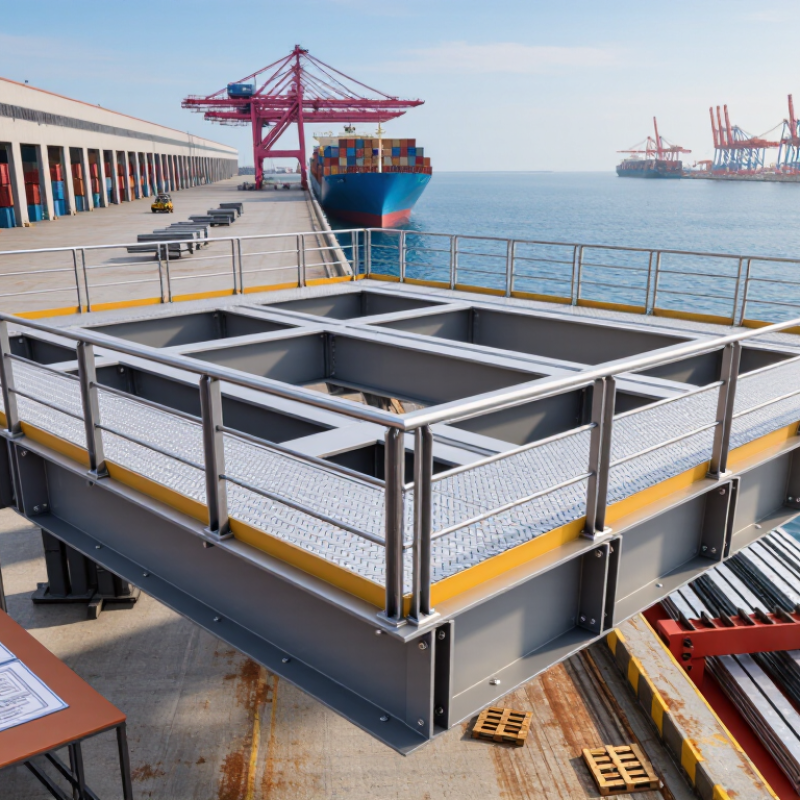
7 Steel Platforms Buying Tips for Global Buyers

Define Loads, Spans, and Service Class Before Comparing Steel Platforms

7 Steel Platforms Buying Tips for Global Buyers

Define Loads, Spans, and Service Class Before Comparing Steel Platforms

Start with the load. List people, tools, stored materials, handrails, stairs, and occasional impact forces. A maintenance platform carrying one technician differs greatly from a platform supporting pipework. State both uniform and concentrated loads. A 300-kilogram equipment point can control the entire design.

Measure the span, support spacing, access openings, and available headroom. Longer spans may require deeper beams, closer columns, or additional bracing. Do not compare prices before confirming these dimensions. A low-cost platform can become expensive after site modifications. Real sites vary. Check floor levels and anchor locations carefully.

Service class also affects the buying decision. Identify indoor or outdoor exposure, humidity, chemicals, temperature changes, and cleaning methods. Corrosive areas may need suitable coatings, drainage details, or corrosion-resistant materials. Ask for design calculations, fabrication drawings, material certificates, welding records, and inspection procedures. Confirm the supplier can work with the project’s governing structural codes and local approval process.

A qualified engineer should verify load combinations, deflection limits, vibration, guardrail resistance, and foundation reactions. I have seen buyers focus on steel weight while overlooking maintenance access and repainting costs. That comparison was incomplete.

Include delivery packaging, lifting points, installation tolerances, and replacement planning. These details often separate a workable platform from a difficult one.

Compare S275JR (275 MPa) and S355 (355 MPa) Yield Strength

For global buyers, compare S275JR and S355 by certified yield strength, not price alone. EN 10025-2:2019 specifies 275 MPa for S275JR and 355 MPa for S355 at thicknesses up to 16 mm. That is about 29% higher nominal yield strength for S355. However, thicker plates receive reduced minimum values. Always check the mill certificate and product thickness.

Seven checks deserve attention: design load, platform span, plate thickness, corrosion exposure, weldability, delivery documents, and local code acceptance. Eurocode 3, EN 1993-1-1, requires engineers to assess buckling, connection resistance, and serviceability. Higher yield strength does not automatically create a safer platform. A slender S355 beam can still deflect or buckle. Strength is only one piece.

S275JR can suit lightly loaded walkways, access decks, and sheltered platforms when engineering calculations confirm it. S355 may reduce member size or improve reserve capacity under heavier loads. Yet thinner sections can complicate welding and local stability. The World Steel Association reported 1,882.6 million tonnes of crude steel production in 2023, showing the scale of global supply, but volume does not prove quality. Ask for EN 10204 3.1 inspection documents, heat numbers, impact-test details, and coating records. I would avoid accepting “S355 equivalent” without a traceable standard. That shortcut is risky.

7 Steel Platforms Buying Tips for Global Buyers — Compare S275JR (275 MPa) and S355 (355 MPa) Yield Strength

No. Buying Tip Data Dimension S275JR S355 Recommended Action for Global Buyers
1 Specify the steel grade clearly Minimum yield strength at thickness ≤ 16 mm S275JR
275 MPa minimum yield strength
S355
355 MPa minimum yield strength
Select S355 when the design requires higher resistance or when a lighter structural section may be possible. Select S275JR when its strength is sufficient and cost or ease of fabrication is more important.
2 Check thickness-related strength reduction Yield strength for common plate thicknesses ≤ 16 mm: 275 MPa
> 16–40 mm: 265 MPa
> 40–63 mm: 255 MPa
> 63–80 mm: 245 MPa
≤ 16 mm: 355 MPa
> 16–40 mm: 345 MPa
> 40–63 mm: 335 MPa
> 63–80 mm: 325 MPa
Do not use the nominal grade number alone for structural calculations. Ask for the actual product thickness and the applicable EN 10025-2 strength table.
3 Compare tensile strength and ductility Typical minimum tensile-strength range Approximately 410–560 MPa, depending on thickness Approximately 470–630 MPa, depending on thickness Compare both yield and tensile strength. Yield strength controls many design checks, while tensile strength and elongation affect failure behavior, forming, and connection details.
4 Confirm impact toughness requirements Charpy V-notch impact designation JR: minimum 27 J at +20°C Standard S355JR: minimum 27 J at +20°C For cold, outdoor, or dynamically loaded platforms, consider an impact class such as J0 or J2 when specified by the design. Confirm the test temperature and energy value on the inspection documents.
5 Match the grade to the platform load Typical structural application Walkways, access platforms, stairs, frames, and supports with moderate design loads Heavier-duty platforms, long spans, concentrated loads, lifting areas, and structures requiring higher load capacity Have a qualified engineer verify bending, shear, buckling, deflection, vibration, and connection capacity. A higher-strength steel does not automatically permit thinner members.
6 Review welding and fabrication controls Weldability and carbon-equivalent considerations Generally weldable when the correct procedure, preheating, consumables, and heat input are used Generally weldable, but the higher strength and possible thickness increase require closer control of procedure qualification and heat input Request the material certificate, welding procedure specification, welder qualifications, heat-treatment requirements, and any preheat or interpass-temperature limits before production.
7 Control documentation, coating, and delivery Quality and international-shipping checks Specify EN 10025-2 compliance, grade S275JR, dimensions, tolerances, surface condition, and inspection level Specify EN 10025-2 compliance, grade S355, dimensions, tolerances, surface condition, and inspection level Define the required certificate type, such as EN 10204 3.1 where applicable; verify heat number traceability, marking, packing, corrosion protection, Incoterms, loading limits, and destination-country requirements.
Technical note: Values shown are commonly specified minimum or typical ranges based on EN 10025-2 grade designations. Exact mechanical-property limits depend on product form, thickness, delivery condition, and the edition of the applicable standard. Final platform selection should be confirmed by the project engineer and the purchaser's technical specification.

Verify OSHA 1910.23 Guardrails and 1.1 kN Concentrated-Load Criteria

7 Steel Platforms Buying Tips for Global Buyers

Verify OSHA 1910.23 Guardrails and 1.1 kN Concentrated-Load Criteria

For U.S. installations, OSHA 1910.23 requires guardrails with a 42-inch top edge, plus or minus 3 inches. The system must resist a 200-pound force, or about 0.89 kN, applied outward or downward near the top rail. A midrail is also generally required. Do not confuse this rule with a 1.1 kN concentrated-load specification. The 1.1 kN value is stronger, about 247 pounds, but its test method may come from a project standard or another jurisdiction. Confirm load direction, contact area, duration, and test location in writing.

The U.S. Bureau of Labor Statistics reported 885 fatal workplace injuries involving falls, slips, and trips in 2023. That represented 20.8% of all fatal work injuries. These figures make guardrail verification more than a purchasing detail. Check weld quality, post spacing, toe-board height, platform deflection, and corrosion protection. Ask for stamped drawings, material grades, inspection records, and a load-test report from a competent laboratory.

Tips: Request separate evidence for OSHA compliance and the 1.1 kN criterion. A certificate alone may be insufficient. Compare the tested platform with the delivered unit, including bolt patterns and rail dimensions.

Field reality matters. A drawing can look compliant yet fail after poor anchoring or uneven flooring. I would inspect the first shipment personally, then document every deviation. Small gaps are easy to overlook.

7 Steel Platforms Buying Tips for Global Buyers

Verify OSHA 1910.23 guardrail dimensions and distinguish the OSHA top-edge load requirement from a 1.1 kN concentrated-load specification.

How to read this chart: OSHA 29 CFR 1910.23 requires guardrail systems to withstand a 200 lb force, equivalent to approximately 0.89 kN, applied within 2 inches of the top edge in an outward or downward direction. A 1.1 kN concentrated-load requirement is a higher purchasing specification and should be confirmed in the platform’s test documentation.

Specify ISO 1461 Hot-Dip Galvanizing Thickness for Corrosion Control

When buying steel platforms globally, corrosion protection should begin with a measurable requirement. Specify hot-dip galvanizing to ISO 1461, not simply “galvanized steel.” The required thickness depends on the steel section thickness. For structural steel over 6 mm, ISO 1461 commonly requires an average coating thickness of 85 μm and a local minimum of 70 μm. Confirm the applicable table before issuing a purchase order.

Tip: Write the coating requirement directly into the technical specification. State ISO 1461, the standard edition, and whether acceptance uses local or mean thickness. Request inspection records showing magnetic gauge readings, sampling locations, and steel thickness. A clear certificate is useful, but it should not replace physical verification.

Design details matter too. Water trapped around platform joints can damage steel despite adequate zinc thickness. Ask for sloped walking surfaces, open drainage paths, and accessible connections.

Check that drilling, welding, and cutting are completed before galvanizing whenever possible. Some touch-up areas may need separate approval.

Thicker is not always better. Excess zinc can affect fit-up, threads, and moving parts. This detail is easy to miss. A small trial assembly can reveal problems before shipment, although it adds time and cost. Keep that trade-off visible.

Audit EN 1090-1 Execution Class, Welding Records, and Delivered Cost

7 Steel Platforms Buying Tips for Global Buyers

When buying steel platforms, confirm the required EN 1090-1 Execution Class before requesting quotations. EXC1, EXC2, EXC3, and EXC4 reflect different risks and production controls. The class should match the design drawings, loading conditions, and project location. Ask for the manufacturer’s Factory Production Control certificate and relevant Declaration of Performance. Do not accept a certificate without checking its scope and validity. Small details matter.

Review welding evidence, not only finished photographs. Request approved Welding Procedure Specifications, supporting qualification records, and welder qualification documents. Check material certificates, heat numbers, joint details, and inspection results. Non-destructive testing reports should identify welds clearly. A missing traceability link can delay approval. It is easy to overlook.

Delivered cost needs more than the factory price. Include steel weight, surface treatment, packing, inland transport, ocean freight, insurance, duties, port charges, unloading, and site assembly. Confirm whether stairs, handrails, fasteners, and touch-up materials are included. Ask for delivery terms and a realistic production schedule. Cheap quotes sometimes exclude inspection or special packing. That mistake becomes expensive later. A spreadsheet helps, but it cannot replace a technical review. Global buyers should also check local engineering rules, import requirements, and available lifting equipment before placing the order.

FAQS

What information should buyers define before comparing steel platforms?

Start with the loads. List people, tools, stored materials, stairs, handrails, and impact forces. State uniform and concentrated loads. A 300-kilogram equipment point may control the design.

Why are span and access measurements important?

Measure support spacing, openings, headroom, floor levels, and anchor locations. Longer spans may need deeper beams or extra bracing. A cheap platform can become expensive after site modifications. Real sites are rarely perfect.

How does service class affect platform selection?

Identify indoor or outdoor exposure, humidity, chemicals, temperature changes, and cleaning methods. Corrosive areas may need suitable coatings and drainage details. Maintenance access matters too. I have seen buyers overlook repainting costs.

Is higher yield strength always better?

No. Higher strength does not automatically create a safer platform. A slender high-strength beam can still deflect or buckle. Engineers must check stability, connections, vibration, and serviceability.

When might S275JR be suitable for a platform?

It may suit lightly loaded walkways, access decks, and sheltered platforms. Engineering calculations must confirm the choice. Check the steel thickness and certified yield value. Price alone is a weak comparison.

When could S355 provide an advantage?

S355 may reduce member size or improve reserve capacity under heavier loads. However, thinner sections can create welding and local stability issues. More strength can introduce different problems. That trade-off deserves review.

Which documents should buyers request from a supplier?

Request design calculations, fabrication drawings, material certificates, welding records, and inspection procedures. Ask for traceable heat numbers and impact-test details. Coating records are also useful. “Equivalent” material without evidence is risky.

How should buyers specify hot-dip galvanizing?

State the applicable galvanizing standard and required coating thickness in the purchase specification. For structural steel over 6 millimeters, an average thickness of 85 micrometers is commonly required. Request gauge readings and sampling locations. A certificate should not replace physical checks.

What design details help prevent corrosion after galvanizing?

Use sloped walking surfaces, open drainage paths, and accessible connections. Complete drilling, cutting, and welding before galvanizing when possible. Trapped water can damage steel despite adequate zinc thickness. This detail is easy to miss.

What installation details should global buyers confirm?

Confirm delivery packaging, lifting points, installation tolerances, and replacement planning. A small trial assembly may reveal fit-up or thread problems. It adds time and cost. Still, ignoring it may cost more later.

Conclusion

When purchasing Steel Platforms for international projects, buyers should begin by defining the required loads, spans, dimensions, and service class before comparing suppliers or quotations. These factors determine structural performance, usable capacity, deflection limits, and long-term suitability. Material selection also matters: S275JR offers a 275 MPa yield strength, while S355 provides 355 MPa and may be preferable for higher-demand applications when the design supports it. Safety requirements should be verified through guardrail specifications and the OSHA 1910.23 criteria, including the 1.1 kN concentrated-load requirement where applicable.

For outdoor or corrosive environments, specify the required ISO 1461 hot-dip galvanizing coating thickness rather than accepting vague “galvanized” claims. Buyers should also audit EN 1090-1 execution class, welding procedures, inspection reports, traceability, and dimensional records. Finally, evaluate delivered cost, including fabrication, surface treatment, packaging, freight, installation, and future maintenance. A complete technical and commercial review helps global buyers select platforms that balance safety, durability, compliance, and total project value.

Madeline

Madeline

Madeline is a dedicated marketing professional with a wealth of expertise in our company's core offerings. With a keen understanding of the industry, she brings a unique perspective to her role, consistently delivering high-quality content that highlights the superior aspects of our products. As......